
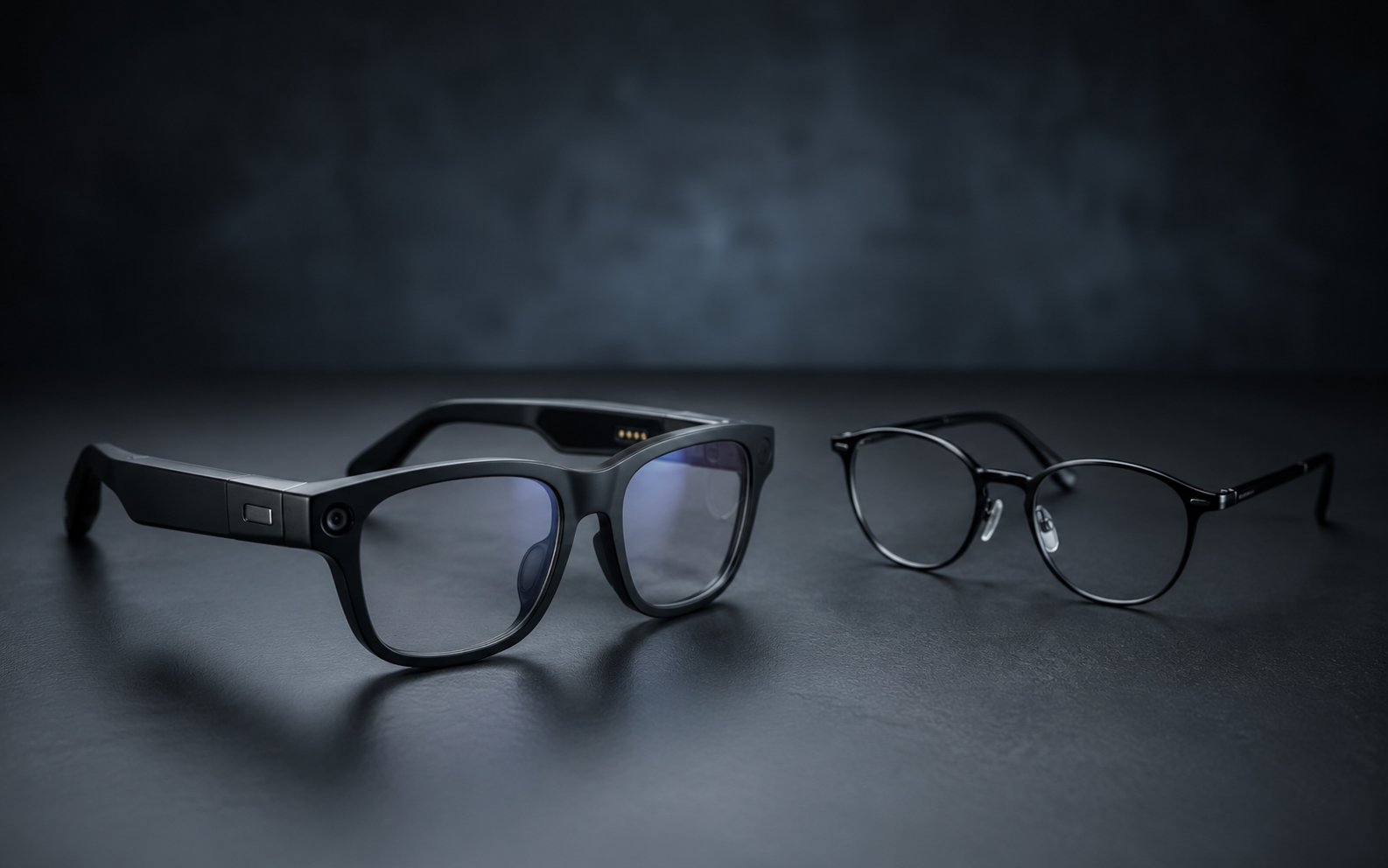
Smart glasses are no longer a futuristic concept reserved for films and industry demos. They’re increasingly visible in modern life and are being used every day by professionals, commuters, and tech-curious users who want their eyewear to do more than simply correct vision. With smart eyewear becoming more mainstream, it naturally raises more questions: How do smart glasses differ from standard glasses, and do smart glasses need special lenses?
With in-built cameras, displays, and audio components, it all comes down to balancing the needs of the frame, the lens, and the glasses wearer. Understanding the differences between smart and standard glasses can help wearers choose the right prescription lens for their smart frames, ensuring long-lasting comfort and performance.
What We Mean By Smart Glasses
When we talk about smart glasses, we mean eyewear that combines vision correction with built-in technology. This can include features such as audio, microphones, cameras, displays, or sensors, all hidden within the frame and accessible with a tap of your finger. They’re designed to look and work like everyday glasses. But they offer hands-free functionality that supports work, communication, and everyday activities in the modern world.
How Smart Glasses Change Lens Requirement
Although smart frames may look similar to standard frames, it’s what’s happening inside them that makes all the difference to your lenses. Smart glasses are designed around built-in tech – cameras, microphones, and sensors. For these to operate effectively, they must sit close to the lens, making lens positioning critical.
Smart eyewear lenses typically require:
- Accurate optical alignment: This enables displays or visual elements sit exactly and comfortably in your line of sight.
- Lens thickness considerations: The index (thickness) of smart lenses will add weight to your frames, which can affect the tech’s performance. Specialist lens fitters can counteract the imbalance.
- Balanced lens weight: You also want to ensure your smart frames sit comfortably for extended periods when used for visual or digital purposes, or both.
When prescription lenses aren’t fitted correctly in connected eyewear, even small misalignments can affect both visual clarity and smart features. The good news is, smart glasses don’t require ‘special’ lenses – they just need expert fitting!
The Importance of Lens Positioning for Balance and Comfort
For those who find prescription smart glasses uncomfortable, the most common cause is poorly fitted lenses. They’re either too heavy, too thick or misaligned, leading to pressure points and poor performance. When prescription lenses are designed, cut and fit specifically for smart frames, everything works together seamlessly.
When prescription lenses for smart glasses are fitted properly:
- Smart glasses feel just like standard glasses
- Weight is evenly distributed across the frame
- You can optimise their digital features with ease
- They’re comfortable enough to wear all day
- They can be worn daily without adjustments
Compatibility is also key, and at Lensology, our prescription lenses fit perfectly with smart glasses. Cut and fitted by our expert technicians, our lenses are designed to meet the exact tolerances of smart frames while still delivering everyday visual comfort.
How It Works
Smart Glasses vs Standard Glasses for Daily Use
Both smart and normal frames have their place in the modern world. The big difference between them is what you want your eyewear to do. Are they purely worn to correct your vision? Are they a fashion statement or a way to streamline your lifestyle by connecting to technology? Let’s compare the most common uses of standard and smart glasses:
At work
Standard occupational prescription glasses are ideal for focused tasks like computer work, reading, or meetings. Whereas smart glasses can add value in certain roles by offering hands-free access to information, notifications, or guided instructions. This is particularly useful in professional or technical environments where multitasking matters.
Commuting and travelling
For drivers and riders, standard prescription glasses provide reliability and safety on the roads. For commuters travelling by train, bus, or on foot, smart glasses can let the wearer access emails, social media, and traffic updates, so they can multitask on the go. The discrete speakers even allow wearers to listen to their favourite playlist or podcast without disturbing others.
Leisure and everyday life
Standard glasses remain a trusted choice for relaxed, low-maintenance wear for everyday activities. However, smart glasses can add extra functionality, whether playing sports, watching films, or walking the dog. Its tech enables audio without headphones, hands-free photography, on-the-go TV watching, and pulling up the latest scores.
Please Note: Not All Places Allow Smart Glasses
It’s important to note that, despite how intelligent smart glasses are, they are banned in certain locations for GDPR and safeguarding reasons. Environments such as healthcare and education settings, care and legal environments, secure and financial workplaces, leisure centres and changing facilities are just a few where smart frames are restricted.

Why Lens Expertise Matters with Smart Frames
Treating smart glasses like ordinary frames is one of the most common mistakes people make. Because of the integrated technology, smart frames have higher demands for prescription lenses. Cutting corners can affect both comfort and performance, preventing wearers from getting the most out of their smart glasses.
Prescription lenses for connected eyewear need to be designed with both vision requirements and technology in mind. That’s where experience makes a difference. Choosing Lensology to fit your smart glasses lenses ensures your lenses are cut, shaped, and positioned correctly – protecting your frames while delivering clear, comfortable vision.
Are Smart Glasses or Standard Glasses Right for You?
Smart glasses and standard glasses aren’t rivals; both play a key role, and it all comes down to your preference and lifestyle. Choosing the right glasses for you, smart or standard, is dependent on the way you live. Standard frames offer simplicity, ease, and universal wear, while smart glasses offer seamless capabilities for those who want to integrate technology into their everyday lives.
Start by understanding your lifestyle and where smart glasses can bring value. It’s also important to seek expert advice before investing in prescription smart glasses. With the right lenses, smart glasses can feel just as comfortable and natural as standard eyewear. They can be used in everyday life while unlocking features that fit a modern lifestyle.
If you’re exploring smart eyewear or already own a pair and want to upgrade the lens, Lensology can help you fit prescription lenses with precision, care, and confidence.